
Child poverty levels in Wales are rising. Poverty goes far beyond a lack of food, but one obvious sign it is growing worse is the increase in children who need help from the government and charities in order to access sufficient food to eat. Last year, the Trussell Trust foodbank network in Wales distributed a devastating 54,000 emergency food parcels to children whose families had been pulled into destitution and could no longer afford to feed them. Over 100,000 children (more than one in 4 pupils) now rely on free school meals – a 37% increase since the 2018/19 school year.
Article 27 of the UNCRC states that every child has the right to a standard of living adequate for their optimal development, and that state parties must assist their parents or carers to implement this right. In practice, if a child’s caregivers cannot provide that standard of living because they are in poverty, governments should usually help uphold this right by providing social protection, such as cash payments to the family.
Some governments prefer to provide material resources like food parcels to people, in order to help them realise this right. However, Child Poverty Action Group, like many other campaigners, is clear that food is not, in itself, a very good solution to food insecurity. Food aid alone does not address the root cause of food insecurity, which is primarily an issue of insufficient income. It also does not allow for the full realisation of the recipient’s right to dignity, because it removes their ability to acquire food in a non-stigmatising way, and to exercise choice over what they eat. Surviving on emergency food aid is not a long-term solution; as a child responding to a Scottish inquiry into food banking and child food insecurity said, “Living is more important than surviving”
The Welsh Government cannot usually make direct payments to families, because most powers over social security are still reserved to Westminster. This means that if a family is finding it hard to get by, the Welsh Government usually has to help them through other policies like free school meals and the School Holiday Enrichment Programme. Their food poverty strategy also provides funding to charitable organisations that supply emergency food parcels, or that redistribute food waste.
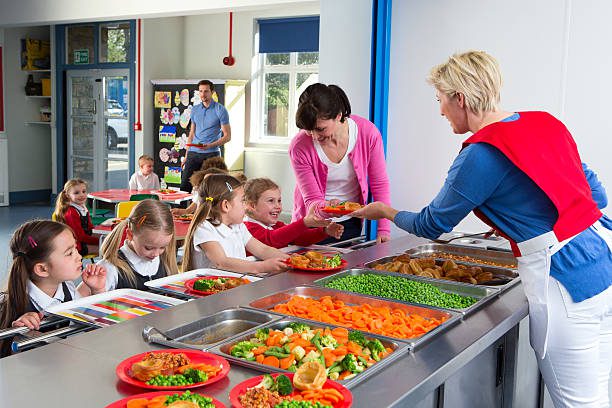
Free school meals are therefore an important part of how the Welsh Government helps children in poverty access an adequate standard of living. Statutory regulations set out how the food provided in schools must be nutritionally balanced, and encourage children and young people to develop “good eating habits”. They also regulate how school catering providers should meet the needs of children with specific dietary requirements, for example because of medical conditions like allergies, or because of the child’s religion or belief.
When Practitioners on our Cost of the School Day project carry out ‘poverty-proofing’ in schools, they always ask children and young people what they think about their school dinners. We are interested in what options are available, how they are served, and whether all pupils get the same range of choices. When children bring in food from home, we want to know whether they can eat it alongside their friends who may only have the option of a free school dinner.
Although regulations forbid schools from publicly identifying which pupils are in receipt of free school meals, the way that food is served in school can still make it obvious who is in receipt of state support. Many children tell us that their daily free school meal allowance isn’t enough to cover the cost of both a meal and a drink, or that they have to forgo a full meal at lunchtime if they choose to buy something to eat at morning break. The way dinner money debt is handled can also highlight which families are struggling with money, for example by handing out debt letters in front of the class.
We often come across good practice around school meals, which ensures children in poverty are not stigmatised or unable to enjoy the social aspect of eating alongside their friends. School catering staff often show great compassion and attentive care towards the needs of the children in their school. They use creative and flexible approaches to make sure they are meeting the religious and medical dietary needs of all learners, and that all children in poverty (including those ineligible for free school meals) get to join in and eat food they enjoy. As one school cook told us:
“If someone comes in to school late and they’ve missed breakfast club or not had any breakfast, the teacher will come down and ask if I can do them a bit of toast. I’d hate to think someone was going hungry. One child doesn’t have a lot at home, so I do a sandwich for them later in the afternoon before they go home, so I know they’ve had something else to eat that day.”
Fundamentally, all poverty is rooted in a lack of financial resources to meet a basic standard of living, relative to what is commonplace in society. Rights-respecting responses to poverty seek to not only address material need, but also ensure that the recipients of assistance do not experience stigma or discrimination when they access this support. This means offering all children the dignity of choice about what they eat, respecting and upholding their ethical values around food, and ensuring that they are not identified as being poorer than their peers.
About the Author
Ellie is Wales Development Manager at Child Poverty Action Group. She manages the UK Cost of the School Day project across the country, which aims to create a fairer education system for children in poverty.